Education et développement économique : analyse de l'impact de l'investissement éducatif sur la productivité agricole en milieu rural au Sénégal
2023
Abstract views : 1,509 Downloads : 222

CODESRIA Books Publication System
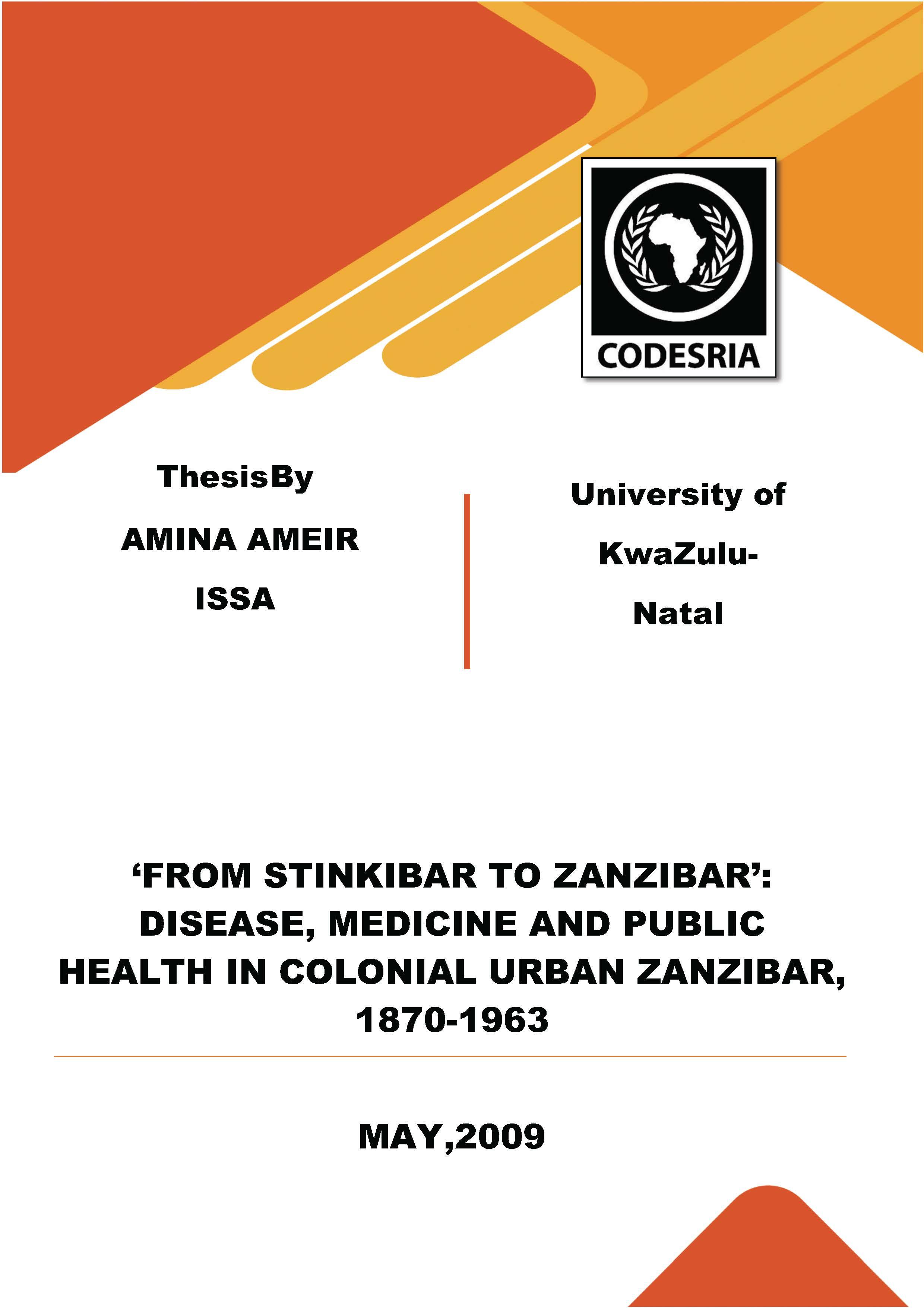
Until recently, scholars of Zanzibar history have not greatly focused on study the history of disease, western medicine and public health in the colonial period. This thesis covers these histories in urban Zanzibar from 1870 to 1963. In addition, it looks at the responses of the urban population to these Western-originated medical and public health facilities during the colonial period. The thesis starts by exploring history of Zanzibar Town during the nineteenth century looking at the expansion of trade and migration of people and how new pathogens were introduced. Local diseases became more serious due to population expansion. I also examine the arrival, introduction and consolidation of Western medical practices. The establishment of hospitals, the training of doctors and nurses and the extension of these facilities to the people are all discussed, as are anti-smallpox, bubonic plague, malaria and sanitation programmes before and after the Second World War. The thesis argues that the colonial government introduced medical institutions in urban Zanzibar with various motives. One of the main reasons was to control disease and ensure the health of the population. The anti-malarial, smallpox and bubonic plague campaigns are an example of how the government tackled these issues. The introduction of preventive measures was also important. The Quarantine Station, the Infectious Diseases Hospital and the Government General Hospitals were established. Other facilities were the Mental Hospitals and Leprosaria. The work of extending medical services was not only done by missionaries and the colonial state but was in great measure through the contribution of Zanzibari medical philanthropists, community, religious and political leaders. Mudiris, Shehas, family members and political parties also played a significant role. In the twentieth century, newspapers owned by individuals and political parties and community associations played a major role too. Zanzibari medical doctors, nurses, orderlies, ayahs, public health staffs were cultural brokers who facilitated the extension of biomedicine and public health measures. By the end of the British colonial rule in Zanzibar in 1963 Western medicine was an important therapeutic option for the people not only in urban Zanzibar but also in both Unguja and Pemba islands.
APA ISSA, A. A. (2023). From Stinkibar to Zanzibar: Disease, Medicine and Public Health in Colonial Urban Zanzibar. CODESRIA. https://doi.org/10.57054/codesria.pub.994
Chicago ISSA, AMINA AMEIR. From Stinkibar to Zanzibar: Disease, Medicine and Public Health in Colonial Urban Zanzibar. Dakar: CODESRIA, 2023. https://doi.org/10.57054/codesria.pub.994.
MLA ISSA, AMINA AMEIR. From Stinkibar to Zanzibar: Disease, Medicine and Public Health in Colonial Urban Zanzibar. CODESRIA, 2023. https://doi.org/10.57054/codesria.pub.994.
2023
Abstract views : 1,509 Downloads : 222
2023
Abstract views : 1,495 Downloads : 241
2023
Abstract views : 981 Downloads : 184
2023
Abstract views : 990 Downloads : 163
2023
Abstract views : 1,128 Downloads : 163
2023
Abstract views : 993 Downloads : 179
2023
Abstract views : 704 Downloads : 119
2023
Abstract views : 784
2023
Abstract views : 1,243 Downloads : 189
2023
Abstract views : 787 Downloads : 422
2023
Abstract views : 1,718 Downloads : 253