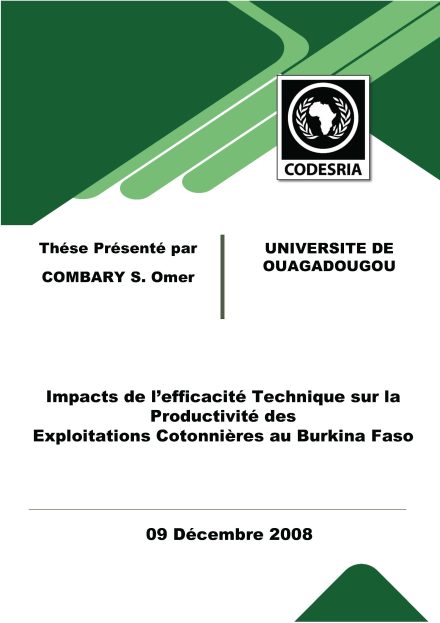
Impacts de l’efficacité Technique sur la Productivité des Exploitations Cotonnières au Burkina Faso
2023
##plugins.themes.clarte.stats.views## : 1 495 ##plugins.themes.clarte.stats.downloads## : 241

CODESRIA Books Publication System
The study examined the changing family structure of the Binis, identified and analyzed the effects of trafficking on the Bini women and their family structures. Further more, the study assessed the roles played by cultural factors in precipitating trans-border sexual transaction in the region. This was with a view to analysing the changes in the patriarchal family structure of the
Bini people occasioned by the prevalence of sex trafficking in the region.
The study relied on qualitative data generated through Household-based Interviews, Key Informant Interviews, Vignette-based Focus Group Discussions (FGD) and Life Histories. Forty households were purposively selected from three Local Government Areas (Oredo, Egor and Uhumwode) which constituted the study area. A total of 18 vignette-based FGDs were held among adult males, adult females and youths using a story of sex-trafficking that ended on “successful” note and a tragic story of a sex-trafficked victim. In addition, fifteen Life Histories were conducted on previously trafficked victims who were selected through snowballing, while interviews were held with five Key Informants who were selected on the basis of their social
statuses in the study area. Observation of a wedding and a burial ceremony was done in each of the three selected local government areas. The qualitative data were analysed using Anthropac and subjected to content analysis, while Z-Y index tables helped to present study findings.
The results showed that there were changes in the traditional Bini family structures which was hitherto characterized by male dominance and pervasive sexual restrictions on women. Men’s power and authority in some families had been challenged thereby altering the traditional patriarchal structure. Despite sexual taboos placed on women, both married and unmarried
women were involved in international prostitution while male partners of such women and their dependants became beneficiaries of such ventures. Consequently, the traditional Bini family structure became eroded as many of the so-called successful women in trans-border sexual transaction now played pivotal roles in important family decisions. The results further showed that women who had succeeded in sex-trafficking enjoyed improved economic status and recognition in their families. It was established that wedding and burial ceremonies were important avenues through which successful women in trans-border sexual trade showcased their wealth and relevance in their families. However, a few of the participants in the FGD, expressed their strong reservations against sex-trafficking despite the huge financial returns. Cultural factors such as polygyny, large family size and general apathy by male household heads toward meeting family economic needs were identified by previously trafficked victims as the most critical factors which had precipitated trafficking in the region. Other factors identified included male child preference, the inheritance system, excessive sexual taboos on women, poor girl-child status and heavy reliance on the extended kins network. These factors combined, made the Bini family structure vulnerable to the problem posed by women trafficking and international prostitution.
The study concluded that classical patriarchy among the Bini people was a critical factor which had exacerbated the phenomenon of sex-trafficking in the region. Despite economic benefits derivable from trans-border sex trade in the study area, the changes it brought about posed a serious threat to the integrity of the contemporary Bini family structure and its ability to inculcate much cherished values into its members.
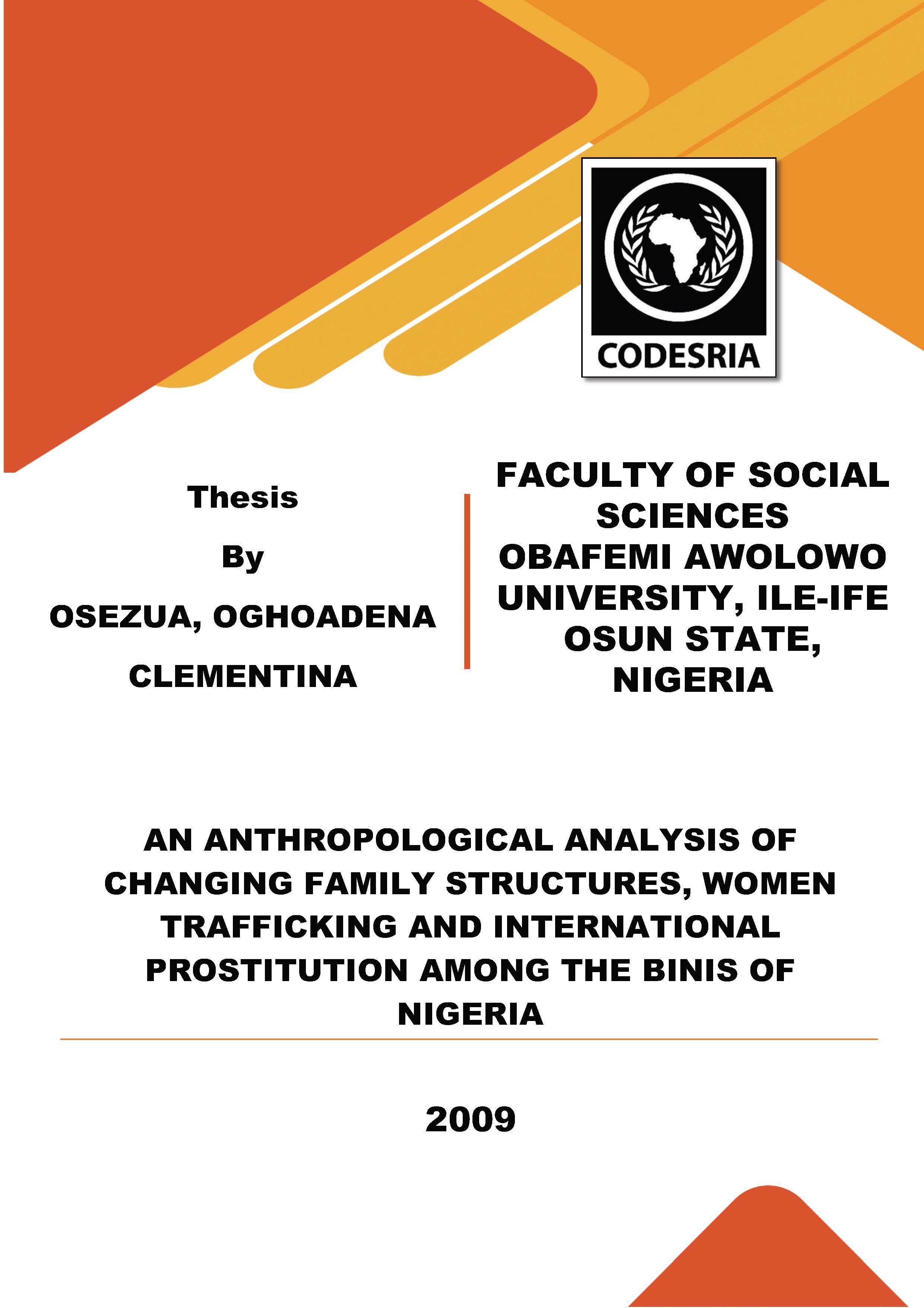
APA CLEMENTINA, O. O. (2023). AN ANTHROPOLOGICAL ANALYSIS OF CHANGING FAMILY STRUCTURES, WOMEN TRAFFICKING AND INTERNATIONAL PROSTITUTION AMONG THE BINIS OF NIGERIA. CODESRIA. https://doi.org/10.57054/codesria.pub.1460
Chicago CLEMENTINA, OSEZUA, OGHOADENA. AN ANTHROPOLOGICAL ANALYSIS OF CHANGING FAMILY STRUCTURES, WOMEN TRAFFICKING AND INTERNATIONAL PROSTITUTION AMONG THE BINIS OF NIGERIA. Dakar: CODESRIA, 2023. https://doi.org/10.57054/codesria.pub.1460.
MLA CLEMENTINA, OSEZUA, OGHOADENA. AN ANTHROPOLOGICAL ANALYSIS OF CHANGING FAMILY STRUCTURES, WOMEN TRAFFICKING AND INTERNATIONAL PROSTITUTION AMONG THE BINIS OF NIGERIA. CODESRIA, 2023. https://doi.org/10.57054/codesria.pub.1460.
2023
##plugins.themes.clarte.stats.views## : 1 495 ##plugins.themes.clarte.stats.downloads## : 241
2023
##plugins.themes.clarte.stats.views## : 1 509 ##plugins.themes.clarte.stats.downloads## : 222
2023
##plugins.themes.clarte.stats.views## : 981 ##plugins.themes.clarte.stats.downloads## : 184
2023
##plugins.themes.clarte.stats.views## : 990 ##plugins.themes.clarte.stats.downloads## : 163
2023
##plugins.themes.clarte.stats.views## : 1 128 ##plugins.themes.clarte.stats.downloads## : 163
2023
##plugins.themes.clarte.stats.views## : 993 ##plugins.themes.clarte.stats.downloads## : 179
2023
##plugins.themes.clarte.stats.views## : 1 380
2023
##plugins.themes.clarte.stats.views## : 704 ##plugins.themes.clarte.stats.downloads## : 119
2023
##plugins.themes.clarte.stats.views## : 784
2023
##plugins.themes.clarte.stats.views## : 1 243 ##plugins.themes.clarte.stats.downloads## : 189
2023
##plugins.themes.clarte.stats.views## : 787 ##plugins.themes.clarte.stats.downloads## : 422
2023
##plugins.themes.clarte.stats.views## : 1 718 ##plugins.themes.clarte.stats.downloads## : 253