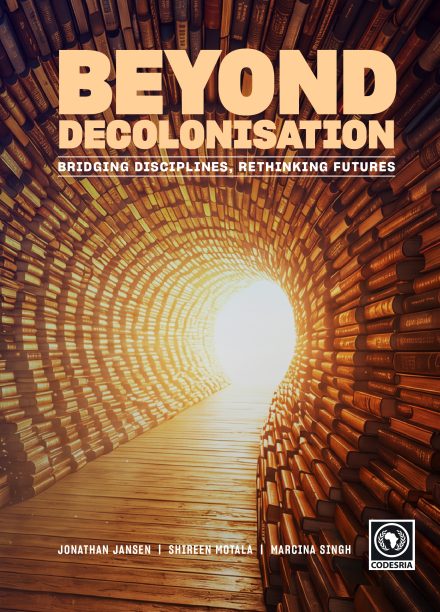
Beyond Decolonisation: Bridging Disciplines, Rethinking Futures
2026
Abstract views : 398

CODESRIA Books Publication System
CODESRIA, 2014, 232 p., ISBN : 978-2-86978-588-5
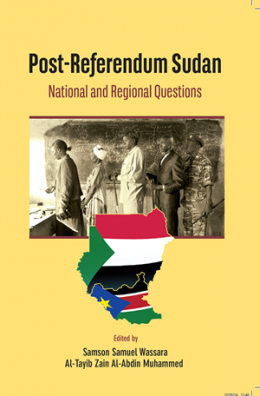
The fate of Sudan, by then the largest country in Africa, was clearly decided when results of the referendum vote were announced in February 2011. Policy makers, scholars and the international community began to grapple with critical issues that might arise after the independence of South Sudan and how different stakeholders were likely to react during the period of uncertainty.
Political developments in Sudan were long-term outcomes of post-cold war revolutions in the world system after the Soviet Union collapsed. A domino effect of such events swept across Eastern Europe with some manifestations in the Horn of Africa. The fall of Mengistu Haile Mariam, marked the beginning of the redrawing of the map of Africa and posed a challenge to the long held principle of preservation of colonial borders that had been enshrined in the Charter of the Organisation of African Unity. The precedent set by the independence of Eritrea seemed to encourage southern Sudan to press forward for independence through a two pronged approach of armed struggle and diplomacy led by the Sudan People’s Liberation Army/Movement.
This book attempts to understand national, regional and continental dimensions of the unresolved issues that could result in the escalation of conflict in the Sudan. It examines internal dynamics of the Sudan after secession of the south and how these dynamics might affect neighbouring countries in the geopolitical regions: the Horn of Africa, the Great Lakes Region and Central Africa. A section of the book is dedicated to dynamics within South Sudan as a new state. Post-conflict South Sudan as country was marked by extreme poverty, lack of infrastructure and prevalence of inter-communal armed violence. This book proposes possible policies to prevent the country from descending into a state of economic and social chaos.
The book provides the argument that equitable and rational transformative socio-economic programmes and policies could greatly reduce potentials for conflict. This book calls on policy makers to pursue policies that could lead to concrete projects planned to alleviate poverty and provision of basic social services such as education, health, and safe water. The book comes to the conclusion that political stability will depend on collective actions of stakeholders to ensure that peace prevails both in the north and the south to guarantee human security in the region.
5 citations
Citations counted by OpenAlex, an open index of scholarly literature, updated weekly. Google Scholar may count more.
APA Wassara, S. S., al-Abdin, A.-T. Z., Ssemwanga, A., Yongo-Bure, B., Bankie, B., Zambakari, C., Hawi, H. O., Berhanu, K., Mamdani, M., Nyaba, P. A., & System, P. (2014). Post-Referendum Sudan: National and Regional Questions. CODESRIA. https://doi.org/10.2307/j.ctvk8w0c6
Chicago Wassara, Samson Samuel, Al-Tayib Zain al-Abdin, Andrew Ssemwanga, Benaiah Yongo-Bure, B.F. Bankie, Christopher Zambakari, Hamed Omer Hawi, et al. Post-Referendum Sudan: National and Regional Questions. Dakar: CODESRIA, 2014. https://doi.org/10.2307/j.ctvk8w0c6.
MLA Wassara, Samson Samuel, et al. Post-Referendum Sudan: National and Regional Questions. CODESRIA, 2014. https://doi.org/10.2307/j.ctvk8w0c6.
2026
Abstract views : 398
2026
Abstract views : 1,678
2026
Abstract views : 963
2026
Abstract views : 5,650
2025
Abstract views : 4,196
2024
Abstract views : 5,471
2024
Abstract views : 5,464
2024
Abstract views : 6,098 Downloads : 59
2023
Abstract views : 8,262
2023
Abstract views : 2,916 Downloads : 1,031
2023
Abstract views : 6,888